
The Poetic Journey of Meo Fusciuni: An Olfactory Editorial

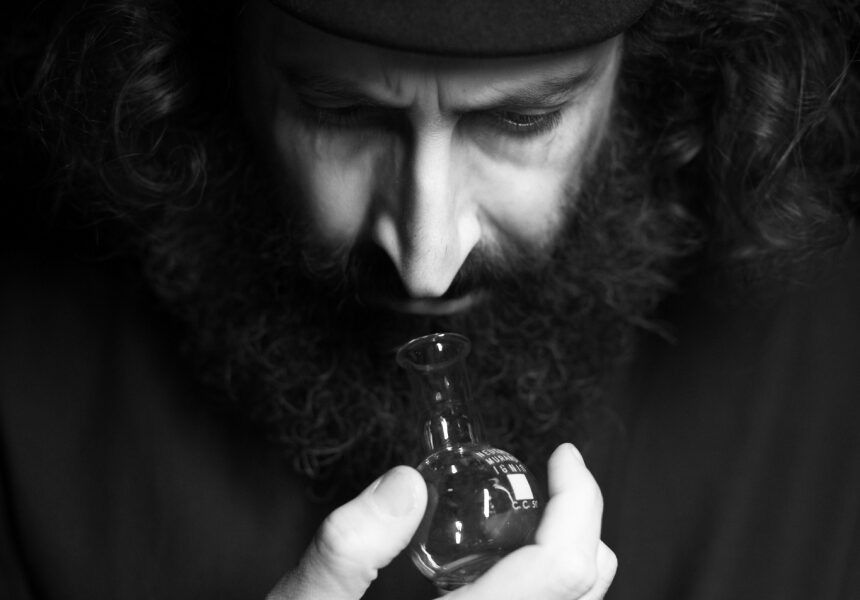
In the world of artisanal perfumery, some creators blend science and poetry with effortless grace. Meo Fusciuni – the artistic moniker of Italian perfumer Giuseppe Imprezzabile – is one such figure. His fragrances unfold like chapters of a personal diary, rich with memory, introspection, and even a touch of mysticism. To encounter a Meo Fusciuni scent is to be drawn into a story: each perfume is conceived as an olfactory poem, inviting the wearer on a journey through time, place, and emotion. In a niche market crowded with trend-driven releases, Fusciuni’s work stands apart for its authenticity and depth – “a true Italian soul, distilled in apothecary bottles,” woven with scientific precision and poetic sensibility. The result is an evocative collection that feels less like a product line and more like a literary anthology written in scent.
From Sicily to Scent: The Story of Meo Fusciuni
Meo Fusciuni’s journey began far from the perfume capitals of Paris or Grasse – it started in Mazara del Vallo, a historic fishing town in western Sicily where Giuseppe Imprezzabile was born in 1977. The name “Meo Fusciuni” itself is a tribute to his family heritage: Meo is a diminutive of his father’s name (Bartolomeo), and Fusciuni means “flowing stream” in the Sicilian dialect – a nickname of his grandfather. This poetic pseudonym foreshadows the role of memory and continuity in his work.
Before he ever distilled emotions into perfume, Imprezzabile immersed himself in science and nature. He trained as a pharmacist, biochemist, and ethnobotanist, even running an herbalist’s shop in his hometown. This grounding in botany and chemistry gave him an intimate knowledge of natural ingredients and their properties. Yet, he was equally drawn to the arts – literature, music, and travel. A pivotal moment came in 2009 during travels in Istanbul. Surrounded by the spice-laden air of the bazaars and the solemn grandeur of mosques by the Bosphorus, Imprezzabile felt “a door opening” onto a new destiny. In 2010 he formally launched Meo Fusciuni as an independent perfume house (co-founded with his partner Federica Castellani, who serves as artistic director).

The very first collection, tellingly named the Trilogy of Journey, bottled his wanderings in Istanbul, Morocco, and Sicily. What began as a personal “project of olfactory research” blending perfumery, herbology and botany soon evolved into a full-fledged niche perfume line grounded in the idea of scent as storytelling.
Over the next decade, Meo Fusciuni’s oeuvre blossomed in chapters or cycles. After the travel trilogy, which captured “yesterday’s nomadic travel”, came a Cycle of Poetry in 2012–2013 that delved into literature and introspection. In 2014 he released Narcotico, his first Extrait de Parfum, opening what he calls the Mystic Trilogy – perfumes inspired by the sacred spaces of the soul. Subsequent creations were grouped into themes like the Cycle of Metamorphosis (late 2010s) and a “Timeless Trilogy” of the early 2020s drawing on Asian inspirations. Through all these phases, Fusciuni’s core philosophy remained constant: a perfume must tell a personal story, an emotion, a fragment of life. Every release is autobiographical to some degree – wearing one is, in his words, like “carrying a fragment of his life” on your skin.
Poetry, Philosophy, and Perfume: Fusciuni’s Creative Vision

From the outset, Meo Fusciuni has approached perfumery as a deeply artistic and introspective practice. He often refers to himself not simply as a perfumer or “nose,” but as an “aromatorio,” an old apothecary term for one with herbal knowledge and the skill to fuse spices and plants into remedy. This antiquated title reflects Fusciuni’s blend of ancient wisdom and modern artistry. His perfumes are formulated with a chemist’s care for detail and a poet’s eye for beauty. In the Meo Fusciuni universe, “the word always comes before the perfume, and poetry always precedes the molecule.” This mantra is more than metaphor: each fragrance indeed begins with a written inspiration. Fusciuni conceives a poem, a narrative or concept first, and only then translates it into an olfactory composition. As the brand puts it, “storytelling is the body of perfume” – scent is merely the medium through which an emotion or memory is expressed.
Several key elements define Fusciuni’s creative signature. Nature is one pillar: he places great emphasis on high-quality raw materials, sourcing rare essences (woods, resins, herbs, florals) from trusted suppliers around the world. His background in ethnobotany means he is intimately familiar with the “soul” of each ingredient – how a Somalian frankincense might impart spiritual depth, or how Sicilian orange oil can lift a composition. Many of his formulas incorporate a high proportion of natural extracts, giving them a richly organic feel, though he artfully uses synthetics where needed to achieve specific effects or “textures.” (For instance, he has a fondness for Hedione, a jasmine-derived molecule that adds airiness and movement to a scent, and vetiver, a natural root essence that for him provides a constant, grounding thread.) The balance of nature and chemistry – what Fusciuni calls an “alchemical balance between the material and the spiritual” – is central to his perfumery.
Equally important is memory and introspection. Fusciuni views perfume as an “olfactory memory of life,” a way to capture fleeting moments and emotions.
Every fragrance in the collection is tied to a specific memory, place, or state of mind from his journey. This could be as literal as a city visited, or as abstract as a feeling of loneliness, spiritual yearning, or hope. The compositions often have a contemplative, intimate quality – many fans describe them as melancholic yet beautiful, scents that make you reflect. It is not unusual for Fusciuni to draw on philosophy or spirituality in crafting a perfume’s concept. For example, he has cited reading Zen and Shinto texts while formulating one fragrance, and the poetry of Emily Dickinson while working on another. These intellectual and spiritual influences seep into the fragrances, giving them layers of meaning beyond the olfactory notes.
Perhaps the most immediately striking aspect of Meo Fusciuni’s work is its storytelling and emotional resonance. In an interview, he described his collection as a book where “each fragrance is a chapter of our life — an olfactory translation of text”. Indeed, the brand goes to great lengths to communicate the stories behind the scents. When you purchase a discovery set or sample from Meo Fusciuni, it isn’t accompanied by glossy marketing brochures, but by actual poetry and personal musings. Each scent comes with a written narrative or poem (often the very words that inspired its creation) and even a note about the music that was playing in the lab during its formulation. This multi-sensory, multidisciplinary approach – blending literature, music, and aroma – yields perfumes that feel like fully realized artworks. They are frequently described as “elegies suspended in air”, meditations on time and existence that happen to be wearable. Critics and connoisseurs have praised Fusciuni as “an Italian alchemist of the invisible” who distills not only essences but also thoughts, landscapes, and silences into his bottles. In short, his creative vision treats perfumery as high art: a ritual of memory, a spiritual experience, and a narrative craft all at once.
Olfactory Highlights: Notable Creations
To truly appreciate Meo Fusciuni’s artistry, one must delve into the perfumes themselves. Below, we explore several notable fragrances from his collection – each a scented story that exemplifies the brand’s poetic soul and creative range.
1# Nota di Viaggio (Rites de Passage, 2010)

The debut Meo Fusciuni perfume, Nota di Viaggio #1, was inspired by Imprezzabile’s transformative journey to Istanbul – the moment that sparked his perfumer’s path. In fact, he calls that experience in 2009 “a door opening” that he courageously stepped through. The fragrance itself captures the atmosphere of Constantinople, the “Eastern Gate” of Europe. It opens with a vibrant spice accord: grapefruit and a crackle of black pepper that immediately conjure the bustling magic of Istanbul’s bazaars. There is a bittersweet hint of homesickness in the mix, as the heart unfolds with notes of Ylang-ylang, Geranium, and Rosewood – an exotic floral haze suggesting foreign markets and distant shores. Gradually, the perfume takes on a more sacred, meditative tone: a base of incense, patchouli, vetiver and sandalwood anchors it, evoking the ancient mosques and the quiet, holy spaces hidden in the city’s corners Nota di Viaggio (Rites of Passage) truly lives up to its name – it feels like a journey in itself, starting with the excitement of travel and ending with a sense of spiritual arrival. This scent laid the foundation for Fusciuni’s ethos of perfumery-as-travelogue, marking the first chapter in his Trilogy of Journey.
Notturno (2012)

If the travel trilogy encapsulated physical journeys, Notturno turned inward to chart a journey of the soul through poetry and night. Released in 2012 as the first fragrance of Fusciuni’s Cycle of Poetry, Notturno was directly inspired by literature – notably the verses of Rainer Maria Rilke, Hölderlin, Pablo Neruda, and other poets who explore night and solitud. The fragrance is a study in darkness and creativity: Fusciuni imagined five moments of the night, translating them into five olfactory “steps” woven into the composition. Appropriately, the scent has an intriguingly nocturnal character. It mingles unexpected notes like ink and rum (suggestive of a writer’s midnight desk), with a shadowy accord of leather, amber, and incense that lingers like the black of ink on paper. A subtle sweetness of dried fruit (a whisper of pineapple) and spice flickers through, but the overall impression is of a velvety, introspective darkness – “just one color, black,” as Fusciuni described the concept Notturno demonstrated how Fusciuni uses perfumery to pay homage to other art forms (here, poetry and music), and it set the tone for the more abstract, contemplative fragrances to come in his collection.
Little Song (2018):

Among Meo Fusciuni’s most beloved creations, Little Song is a perfume that perfectly exemplifies his poetic and introspective style. Released in 2018 as the first chapter of Fusciuni’s Cycle of Metamorphosis, it was conceived as a reflection on time, solitude, and transformation. “Little song talks about the time that flows but does not seem to pass – the time that changes us,” Fusciuni writes, framing this fragrance as an exploration of what our inevitable metamorphosis will bring.
In other words, it’s a scent of loneliness and hope, inspired by those quiet moments when one listens to the “song” of one’s own soul. Fittingly, the composition itself is gentle, poignant, yet dynamic in its evolution. It opens with a delicate brightness: bergamot, ginger, and pink pepper form a lively prelude that feels like a flicker of light in the silence. Soon, a unique heart unfolds – a bittersweet duet of Turkish rose and coffee. The rose is lush but not overly floral (there’s “not a trace of green” – it’s a mature, velvety rose), and it intertwines with a rich coffee note to create an atmosphere of pensive warmth. This unusual rose–coffee accord gives Little Song a slightly dark, melancholic beauty, as if symbolizing memories swirling in a quiet room. As hours pass, the fragrance finds its deepest register: smoky tobacco emerges, winding around earthy facets of vetiver and sage, with a subtle animalic whisper from civet and the resinous depth of labdanum. This base is dusky and comforting, like the embrace of night itself. The overall mood of Little Song is contemplative and softly romantic – many wearers describe it as wearing a nostalgic melody on your skin. It’s no surprise Meo Fusciuni refers to this perfume as “the first expression in the Cycle of Metamorphosis,” a point where something ends and something new begins. Little Song invites you to pause, listen inwardly, and perhaps find beauty in solitude and change.
Varanasi (2020):

After exploring themes of travel, poetry, and personal metamorphosis, Fusciuni turned his gaze further East with Varanasi, introduced in 2020. This fragrance is the first chapter of what he calls the “Timeless Trilogy,” a series inspired by Asia and the idea of experiences that transcend time. Varanasi was born directly from the perfumer’s journey to the ancient city of Varanasi in India – a place famous for its spiritual significance on the Ganges River. Fusciuni has shared that Varanasi recounts “what India left in my heart, mind and soul” after his 2017 travels. Befitting its muse, the scent is a rich tapestry of oriental notes that paint a vivid picture of India’s sacred city. It opens with spices: imagine wafts of saffron, nutmeg, and cardamom rising from market stalls – vibrant, warm, and slightly smoky. As the fragrance develops, floral and animalic nuances emerge, echoing the profusion of life and ritual along the Ganges. There are lush strokes of jasmine and rose, but also the earthy, meditative tones of cypriol (nagarmotha) and spikenard, ingredients long used in Indian attars and incense. In the base, Varanasi reveals heavier notes of oud, leather, ambergris, and vetiver, which add shadow and depth, perhaps alluding to the coexistence of life and death in the city’s spiritual ethos. The result is a complex, mesmerizing perfume that feels at once sacred and raw – much like Varanasi itself, a city where funeral pyres burn by the riverbank amid a bustle of daily life. By capturing these contrasts, Varanasi exemplifies Fusciuni’s talent for translating profound travel experiences into olfactory form. It’s not just a scent, but a storyteller – one that invites the wearer to contemplate the timeless cycle of life, death, and memory.
Buio (2024):

One of Meo Fusciuni’s latest releases, Buio (Italian for “darkness”) pushes the brand’s introspective ethos into its most shadowed and profound territory. Buio was unveiled in 2024 as part of the Timeless Trilogy, and it represents a personal and philosophical journey into the heart of darkness – with the promise of light on the other side. Fusciuni describes Buio in poetic, almost journal-like terms: “It is night, it is dark, and our mind goes among wandering thoughts. Buio tells of the moments when we search ourselves for a light… Buio is the time of insomnia… a hope, mine, to let the darkness leave me. It’s dark, as far as I can see.”. These words set the stage for the fragrance’s mood and story: Buio is essentially an olfactory portrait of a sleepless night of the soul – the kind of night where one wrestles with inner demons, yet clings to faith that dawn will come. The scent opens in startling fashion, immediately immersive and smoky. There is a hit of cade oil (a tarry juniper wood extract) and frankincense in the top notes that creates a burning, resinous atmosphere, like dark smoke trailing in a moonless room. A dusty note of carrot seed and a modern leather aroma (a suede-like Suederal accord) add to this impression of dry, smoky solitude. As Buio evolves, a glimmer of gentle light appears in its heart: the unexpected floral softness of osmanthus and peony. These normally delicate flowers are rendered in a subdued, nocturnal way – one commenter aptly noted that in Buio they seem to “find refuge” in the dark heart of the perfume. Hints of geranium and magnolia are present too, but all are cloaked by the rich darkness of labdanum resin and amber, which lend a balsamic, almost meditative warmth. In the dry-down, Buio reveals its sturdy backbone: a deep base of vetiver, patchouli, cedarwood, sandalwood, musk, and leather that remains on the skin like the quiet stillness after a storm. Despite the heavy materials, it’s balanced – smoky yet smooth, shadowy yet comforting. The journey Buio takes you on is intense but ultimately cathartic. It starts with what Fusciuni calls “giant monsters” in the dark (the bold, smoky notes) but by the end, those fears have shrunk to “small beings” at daybreak.
The fragrance’s final impression is one of hope and resilience – much like finding, after a long night of the soul, that the morning light indeed returns. In the niche perfumery landscape, Buio stands out as a profoundly poetic scent, a “dark embrace” that challenges the wearer to trust in the process of personal transformation from darkness into light.
In sum, Meo Fusciuni’s collection is a treasure trove for the fragrance connoisseur who seeks more than just pleasant aromas. It offers an experience, a chance to engage with perfume on multiple levels – intellectual, emotional, and sensory. Whether it’s the earthy mysticism of Narcotico (which Fusciuni calls “a personal journey into the most hidden olfactory memories of my soul”), the gentle wistfulness of Little Song, or the daring introspection of Buio, each creation invites a form of introspection and connection that is rare in modern perfumery. Meo Fusciuni has carved out a niche within niche: a space where perfume becomes poetry, and where wearing a fragrance is akin to reading a poignant story or listening to a familiar, comforting song. It’s a journey well worth taking for those who appreciate the artistry of scent – and for anyone who believes that a perfume, like a poem, can capture the very essence of life’s fleeting moments.
Sources:
Official Meo Fusciuni website – About Usmeofusciuni.commeofusciuni.commeofusciuni.com
ÇaFleureBon (Narcotico review by Nicoleta Tomescu)cafleurebon.comcafleurebon.comcafleurebon.com
Elevated Classics Magazine – A Life in Perfume: The Work of Meo Fusciuni (Interview by Hulya, 2025)elevated-classics.comelevated-classics.comelevated-classics.com
50 ml Niche Perfumery – Meo Fusciuni brand overview50-ml.com
Impossible Color – Profile of Giuseppe Imprezzabileimpossible-color.com
Mon Oeil blog – Meo Fusciuni perfumes descriptionsmonoeil-monoeil.commonoeil-monoeil.commonoeil-monoeil.commonoeil-monoeil.com
Fumerie Parfumerie – Buio product description (including quote from Meo Fusciuni)fumerie.comfumerie.com
Indigo Perfumery – Little Song product excerptindigoperfumery.com
I’m Firenze Digest – The Art of Scent According to Meo Fusciuni (Rebecca Ceccatelli & Giulia Piceni, 2025)imfirenzedigest.comimfirenzedigest.com
Fragrantica – Meo Fusciuni brand and perfume listingsfragrantica.com


